

June 8, 2017 – BY Center for Human Rights in Iran
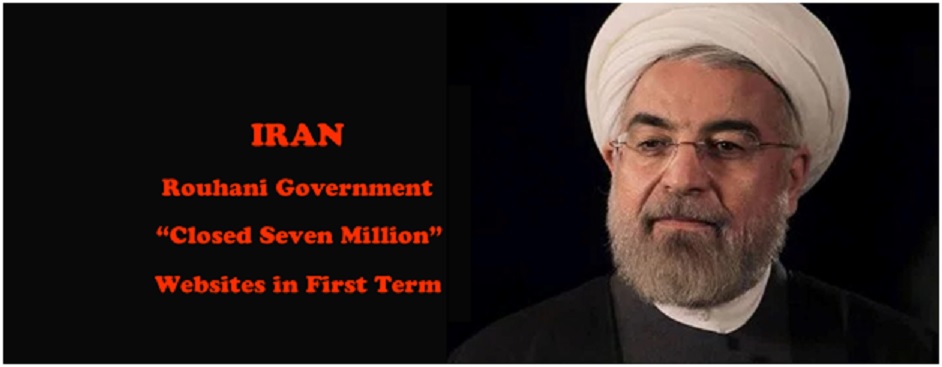
CHRI – A cabinet minister appointed by centrist President Hassan Rouhani has admitted that the Ministry of Telecommunications and Information Technology filtered “seven million” websites during Rouhani’s first term (2013-17).
“In the past three years, we have closed seven million (web) addresses reported to us from authoritative agencies and blocked 121,000 important software and filter breakers,” said Minister of Communication and Technology Mahmoud Vaezi during an open session of Parliament on June 6, 2017.
The minister also claimed that websites and online services considered to be problematic by the state were reduced from eight percent to 1.5 percent by automated “smart filtering” methods.
Smart filtering in Iran refers to the selective blocking of content within a website, as opposed to the complete blocking or shutting down of an entire website.
The minister’s comments contradict Rouhani’s implied openness to improving internet freedom in Iran during his first and second-term presidential campaigns.
“If today everyone has access to information about the world, it is because of the efforts of my government,” Rouhani told supporters at a campaign rally in Isfahan on May 14, 2017, five days before the election.
“As you know, some wanted to ban social media networks, but I stood against them,” he added.
The Rouhani government resisted pressure by conservatives to ban the popular Telegram messaging application, which is reportedly used by an estimated 20 million people in Iran, ahead of the country’s February 2016 parliamentary elections.
In April 2017, the president was criticized by a senior commander of the hardline Islamic Revolutionary Guard Corps (IRGC) for refusing to block a newly released feature of the application.
“In a meeting with Rouhani, we emphasized that allowing Telegram to initiate a voice calling service in Iran would prevent us from having any kind of control. But the President replied, ‘Why are you opposed to any kind of technology imported from the West? Telegram is a symbol of technology and modernism. We should import it to our country,’” said General Hassan Nejat, the head of the IRGC’s Intelligence Organization, on April 20, 2017.
Three days before he made the comments, Telegram’s voice call service was deemed a threat to national security and blocked by the conservative judiciary via a direct order to 20 internet service providers.
Nevertheless, the country’s primary internet policing authority, the Taskforce to Determine Instances of Criminal Content, is headed by Rouhani, and often collaborates with anti-internet state agencies and branches, including the FATA cyber police force, the IRGC, the Intelligence Ministry and the judiciary.
“In the past four years, we have strived to create more opportunities and at the same time raise the security level and reduce threats in cyberspace,” said Vaezi in his comments to Parliament.
“Accordingly, we have been collaborating with our academic institutions and presently 14 universities and research centers in the country are engaged in analyzing and protecting cyberspace,” he added.
Investigations by the Center for Human Rights in Iran (CHRI) indicate that since Rouhani became president in 2013, secure, encrypted messaging services such as Signal and Crypto, as well as cloud services such a Google Drive, Telegram’s Voice Call service, Instagram’s live video, as well as numerous apps and websites belonging to reformist politicians have been blocked.
The internet and social media apps are heavily restricted and censored in Iran, with hardliners in the government viewing any form of internet freedom as a threat to the Islamic Republic.
“We have come to a compromise with the officials of the Telegram network to block sexual content, child abuse, sponsors of violence, terrorism and anti-religious material, and so far we have shut down 173,000 examples,” claimed Vaezi on June 6.
Telegram has repeatedly denied cooperating with Iranian officials on censoring content.
